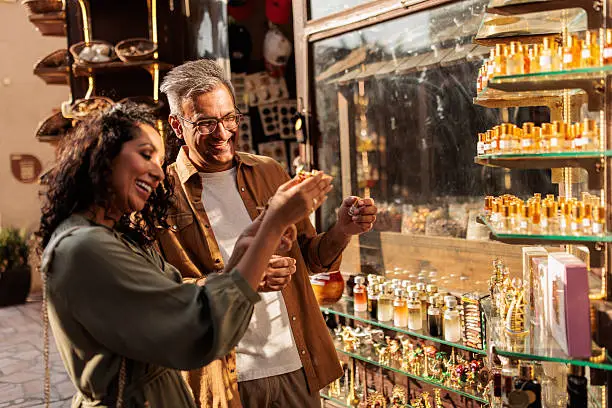
The Perfume Souk is one of the most fragrant corners of Old Dubai, tucked into the historic Deira district along Dubai Creek. Walk down its narrow lanes and the air itself tells you where you are, layered with notes of oud, rose, amber, and dozens of custom blends drifting out of open shopfronts. For anyone curious about Arabic perfumery or simply looking for an authentic souvenir, this market remains one of the city’s most rewarding stops.
This guide covers where to find it, when to go, what to expect from the shops inside, and a few practical tips that make the visit smoother.
| Detail | Information |
|---|---|
| Location | Sikkat Al Khail Street, Deira, near Gold Souk and Dubai Creek |
| Opening Hours | Roughly 10:00 AM to 10:00 PM (later on weekends, shorter on Fridays before 3 PM) |
| Nearest Metro | Baniyas Square Station, about an 8-minute walk |
| Popular Brands | Ajmal Perfumes, Swiss Arabian, Arabian Oud |
| Specialty | Custom scent blending, Arabic oud, bukhoor (incense) |
| Best Visit Time | Late afternoon to evening, for cooler weather and golden-hour photos |
| Negotiation | Prices are not fixed; haggling is expected and welcomed |
A Brief History of the Market
Deira has functioned as Dubai’s primary trading hub since long before the city’s modern skyline existed. Sitting along Dubai Creek, the area grew naturally into a center for merchants moving goods between the Gulf, the Indian subcontinent, and East Africa, and fragrance trading became part of that exchange early on. Long before bottled Western perfumes arrived in the region, traders and local perfumers were already working with oud, musk, amber, and rose, ingredients that remain central to the souk’s offerings today.
As Dubai modernized rapidly from the 1970s onward, many of its older trading districts gave way to new development, but Deira’s souks, including this one, were preserved as working markets rather than turned into purely decorative tourist attractions. That’s part of what makes a visit here feel different from a curated shopping experience; the shops are still run largely by families and independent perfumers who have operated in the same lanes for generations, continuing a trade that predates the city’s transformation into a global destination.
Where Is the Perfume Souk Located?
The market sits on Sikkat Al Khail Street in Deira, right next to the Gold Souk and within easy walking distance of the Spice Souk and Dubai Creek itself. This cluster of markets makes Deira one of the easiest neighborhoods in the city to explore on foot, since several of Dubai’s most historic shopping districts sit within a few minutes of each other.
Reaching the area is simple. The Baniyas Square Metro Station sits roughly an eight-minute walk away, and several bus routes, including 13D, 27, 4, 64, and 8, stop nearby. Visitors coming from Bur Dubai often take the traditional abra boat across the creek, a short and inexpensive ride that drops passengers close to the Marine Transport Station, just a short walk from the souk’s entrance. Taxis and ride-hailing apps remain the most direct option for those coming from further out.
Perfume Souk Timings
Opening hours generally run from around 10:00 AM to 10:00 PM, though individual shops can vary slightly in when they open and close. On Fridays, many stores keep shorter morning hours and don’t open until after 3:00 PM, in line with broader retail patterns across the city. The market stays open year-round, including through the summer months, though visiting in the cooler evening hours tends to be far more comfortable than the middle of a hot afternoon.
Late afternoon into early evening is widely considered the best window to visit. Beyond the more bearable weather, this timing also lines up with golden-hour lighting along the creek, making it a popular stretch for photography before heading back across on an abra at sunset.
What to Expect Inside
Stepping into the market feels like stepping into a different era of the city. Narrow lanes are lined with small, independently run shops, each one stacked floor to ceiling with glass bottles, ornate flacons, and trays of loose oils. Unlike a mall fragrance counter, there’s no rigid brand separation here; international names sit alongside generations-old Emirati perfumers, and customers are encouraged to smell, compare, and ask questions freely.
Ajmal Perfumes is one of the most recognized names operating in the souk, known for blending classic Arabic notes with more contemporary, French-influenced compositions. Swiss Arabian is another long-standing favorite, particularly popular for fragrances built to last well into the evening without needing a reapplication. Beyond the established brands, many smaller stalls specialize in fully custom blending, where a perfumer mixes oils on the spot based on what the customer responds to, creating a one-of-a-kind scent rather than a bottled standard.
Beyond bottled perfume, the souk is also a strong destination for bukhoor, the traditional Arabic incense burned at home or used to scent clothing and fabric, along with oud oil in its many grades and concentrations. These items make particularly popular souvenirs, since they’re distinctly regional and rarely found in the same depth or variety outside the Gulf.
Tips for Visiting the Perfume Souk
Negotiation is part of the culture here, and prices are rarely fixed. Shopkeepers generally expect a bit of respectful back-and-forth before settling on a final number, so it’s worth taking the time rather than accepting the first price offered.
Sampling is encouraged and expected. Most shops are happy to offer small testing vials so visitors can judge how a scent develops over a few hours rather than relying on the initial spray, since Arabic perfumes are often formulated to evolve significantly as they wear. Oil-based fragrances in particular tend to last considerably longer on skin than alcohol-based sprays, which is part of why they remain so popular among regular buyers.
First-time visitors sometimes find the concentration of scents in the air a little overwhelming, especially in the more compact lanes where multiple shops sit close together. Taking occasional breaks outside, or stepping toward the creek for fresh air, can help reset your sense of smell between stops.
Combining the visit with a walk through the nearby Gold Souk and Spice Souk makes for an efficient afternoon, since all three sit within a short walking radius of each other in Deira. Ending the day with an abra ride back across Dubai Creek as the sun sets adds a memorable close to the outing, with the skyline and minarets lit up in the background.
Why Visit the Perfume Souk
For travelers interested in Arabic perfumery, this market offers something genuinely difficult to replicate elsewhere: direct access to perfumers who blend on demand, decades of trading history, and a concentration of regional fragrance brands rarely found together outside the Gulf. It also doubles as a window into Old Dubai itself, a part of the city that has retained its traditional character even as the skyline around it has transformed dramatically over the past few decades.
Whether the goal is finding a signature scent, picking up an authentic gift, or simply soaking in the atmosphere of a working historic market, the experience tends to leave a lasting impression, often quite literally, given how long a well-chosen oud or oil can linger.
Frequently Asked Questions
Where exactly is the Perfume Souk located?
It’s on Sikkat Al Khail Street in the Deira district of Dubai, next to the Gold Souk and close to Dubai Creek.
What are the opening hours?
Generally around 10:00 AM to 10:00 PM, with shorter Friday morning hours since most shops open after 3:00 PM that day.
Can you negotiate prices?
Yes, prices are not fixed, and respectful haggling is a normal and expected part of shopping here.
What should you buy as a souvenir?
Bukhoor incense, oud oil, and custom-blended perfumes are among the most distinctly regional and popular purchases.
Is it worth visiting alongside other Deira souks?
Yes, the Gold Souk and Spice Souk are both within easy walking distance, making it simple to combine all three into one outing.
What’s the best time of day to go?
Late afternoon to early evening, both for cooler weather and better lighting for photos along the creek.