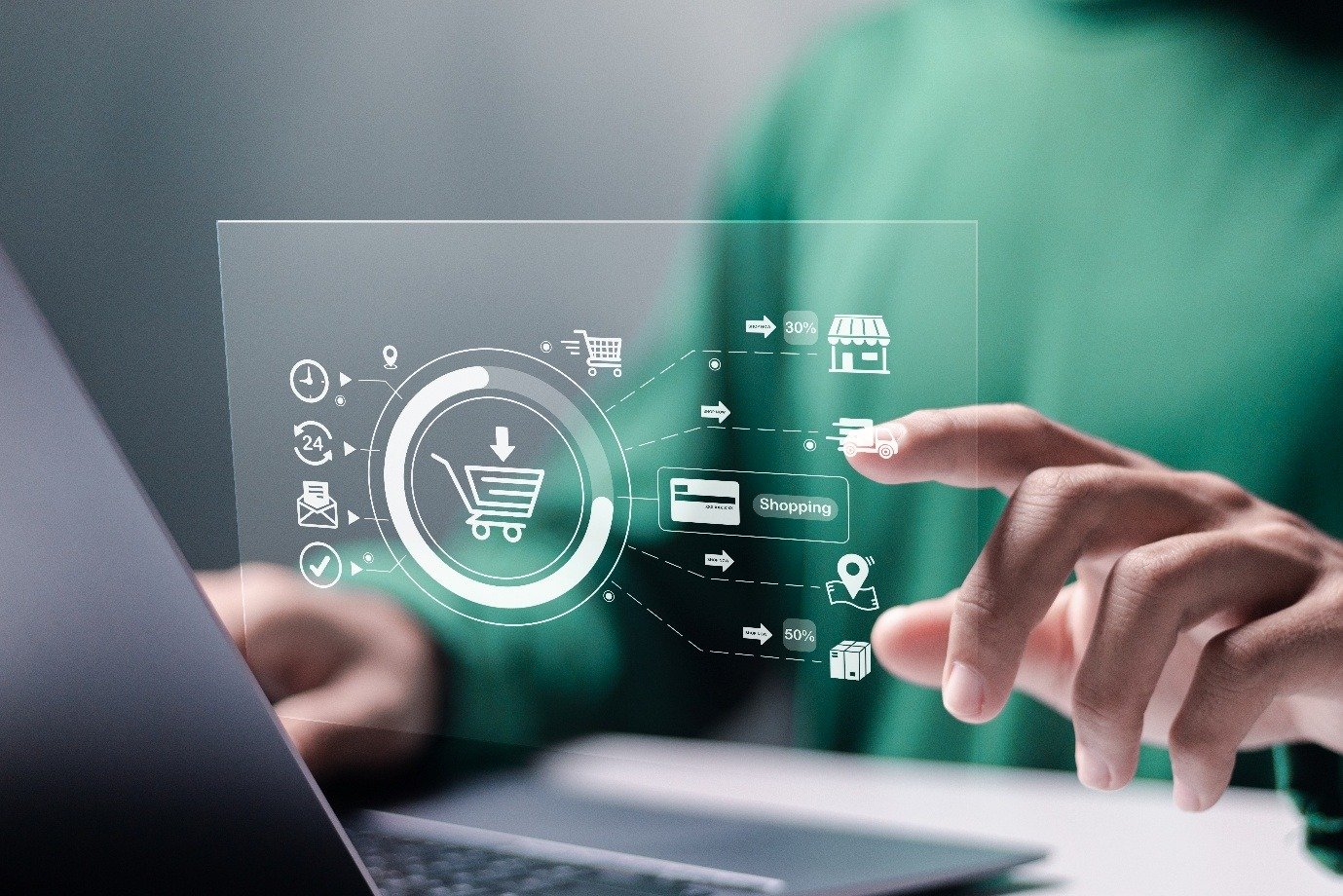
Dubai’s retail sector has seen significant change in recent years, but by the city’s fast-moving standards, the transformation hasn’t happened quickly enough. From the start of the pandemic, digital storefronts came into the light, and they’ve now evolved into a wholesale revolution in brand sales, customer shopping, and the flow of value across the supply chain.
Additionally, 2026 will be quite different from even three years ago when online retail in the emirate was just beginning to take shape. Consumers demand immediate, customized and seamless experiences on every touch point, and businesses are being pressured to provide these experiences at scale without compromising the quality that got them to the finish line to begin with.
However, this change has not occurred on its own. For instance, government policies supporting the digital economy, a technologically literate population with one of the world’s highest smartphone penetration rates, and an innovative business community that is now using new technology as a way to survive are some of the key factors behind this growth.
Every successful online brand that exists in the city now operates on a solid technical platform capable of supporting its business on the path of rapid expansion, complex logistics and ever-changing customer demands.
The Foundation: Why Ecommerce Development in Dubai Matters
The foundation is where the development began. Today’s ecommerce development in Dubai goes beyond than just creating a website; it’s a combination of software expertise, data analysis, logistics integration, and user experience design.
Companies that were once dependent on basic templated stores are now investing in developing custom platforms that can expand into multiple markets, integrate with local payment gateways, and cater to both Arabic- and English-speaking populations.
Therefore, collaboration with specialist Ecommerce development agencies in Dubai, such as DynamoLogic Solutions, is no longer a possibility but a necessity for companies aiming to outperform their competitors.
What makes this moment different from previous periods of digital adoption is the depth of technical sophistication now expected as basic. There are a few essential expectations that a modern Dubai-based online store is expected to meet, beyond just a webpage looking good.
For example, customers expect webpages to load within seconds, maintain peak customer satisfaction during flash sales, support multiple currencies and languages, and feed data back into marketing systems in real time. For such an infrastructure to be built, the development team needs knowledge of relevant technology and the local market, including VAT compliance, local delivery networks, and other metrics.
AI-Driven Personalization Becomes the Norm
In Dubai’s online retail scene, AI has become a standard feature rather than a novelty, where it shapes a future where efficiency reigns supreme. Recommendation engines now track a shopper’s browsing habits, shopping history, and even the time of day to present shoppers with products they are most likely to purchase before they have even browsed for them. The use of chatbots and virtual assistants has also increased, becoming a primary method for resolving customer service issues, with more issues being solved without staff intervention.
Dynamic pricing tools configure offers in real time based on demand and inventory, which can result in increased sales for retailers, reduced acquisition spend, and a smoother shopping experience for customers.
Brands that have already gone all-in with AI-based personalization see significantly increased average order values over those that are still using a one-size-fits-all website. Companies that proactively integrate AI into their business strategy and focus on personalization are seeing a significant rise in average order value compared to those that still rely on a generic, one-size-fits-all ecommerce site.
Mobile-First and Social Commerce Take Over
Dubai is at the heart of a shift in online shopping preference as mobile commerce has firmly taken over desktop as the main channel for online shopping within the UAE. People are making full checkout journeys without ever opening a laptop or computer. This has led to developers taking a “mobile first” approach, integrating app-like web experiences that load quickly, and one-tap payment options to provide an efficient customer experience.
This has given rise to social commerce, too, as platforms such as Instagram and TikTok are more than just discovery channels; they’ve actually transformed to sales channels. Fashion, beauty, and electronics brands have adopted this shopping method with influencers displaying products live on the platform and viewers ordering them via embedded links – which works efficiently for Dubai’s target audience of tech-savvy younger shoppers.
Smarter Logistics and Last-Mile Delivery
However, without timely delivery of products, none of this stands out, which is why logistics has become one of the most active areas of innovation in the city’s retail technology scene. Previously, only high-end brands could offer same-day delivery services, but now it is an increasingly common option for all kinds of businesses. The reason for this is the improved route optimization software, the number of fulfillment centers, and the integration between eCommerce platforms and last-mile delivery services.
Real-time tracking has also become a must-have, and customers expect to track their order’s movement from the warehouse to their doorstep, just as they would with international logistics giants.
Smart warehouses have also improved, especially due to computerized stock control systems, which minimize out-of-stock and overstock problems, which once reduced retailers’ profit.
Fintech and the Push for Seamless Payments
The payment layer has been one of the most critical parts of the e-commerce equation in Dubai. With the city’s rapid shift towards becoming a cashless society, the use of digital wallets, buy now, pay later schemes, and instant bank transfers that clear in seconds is becoming the norm.
Alongside global payment methods, such as Apple Pay and Google Pay, there are now local and regional payment gateways, enabling retailers to access a broader customer base, including tourists and expats, who represent a large proportion of the city’s spending power.
Moreover, at the back end, a machine-learning-based fraud detection system is catching suspicious transactions at an increasing rate – fostering long-term consumer confidence that helps retain customer loyalty.
AR and VR Bring Immersive Shopping to Life
Immersive technology is beginning to create a more blended shopping experience between digital and physical methods – a situation that would have seemed experimental several years ago. AR try-on features enable users to virtually place furniture into their home to visualize the piece in their living room or place a pair of sunglasses on their face before purchasing.
One of the biggest complaints about purchasing a luxury product online is the lack of a physical showroom to experience the product in person, and virtual showrooms help luxury brands overcome this problem for high value items, such as jewelry and watches. While still a smaller slice of overall retail technology spending, they are still rapidly gaining momentum as technology gets more affordable and customers become more comfortable with try-before-you-buy experiences.
Sustainability Enters the Online Retail Conversation
Sustainability has also entered the online retail scene, both because of potential customers’ demand and because it backs Dubai’s sustainability initiatives. Retailers are trying out consolidated shipping to reduce the number of deliveries, use recyclable packaging, and offer carbon-neutral deliveries for environmentally-conscious shoppers.
Transparency about sourcing and manufacturing is now also a selling point in its own, especially for younger consumers who now conduct research on a brand’s values before deciding to buy.
The Rise of Composable, Headless Architecture
At the heart of these trends is a shift toward more personal, modern technology systems. Unlike the rigid, all-in-one platforms used in the past, these new structures allow retailers to adapt faster, customize experiences more easily, and respond quickly to changing customer needs.
Instead of being forced to use everything from a single vendor, companies can now choose from the best-in-class applications in each of the storefront, inventory management, payments and marketing automation, and integrate them via API.
While this can take more technical expertise to create and maintain, it can also benefit the business’s ability to quickly adapt to new customer preferences or market changes: something that is crucial in an ever-changing shopping city, where trends are likely to change every shopping season.
Finding the Right Development Partner
For businesses trying to navigate all of this at once, the technical complexity can be daunting and challenging to integrate.
To achieve the right platform, integration with payment and logistics providers, a personalized approach enabled by AI, and the performance and security customers have come to expect, requires sophisticated expertise that most internal teams lack the bandwidth to develop.
Therefore, more brands are now opting to work with a dedicated development partner that’s knowledgeable about the technology and the specific needs of the UAE market, instead of building a web of generic solutions.
Looking Ahead
In 2026, online retailing in Dubai isn’t just about selling products; it’s about providing tailored solutions. In 2026, it’s necessary to shift business focus to offering personalized solutions by creating an interdependent, smart, customer-focused network that can outpace a quick-moving and ever-demanding market.
The brands that are succeeding today didn’t treat digital integration as an add-on feature, but instead, built a platform that is scalable, adaptable and personalized at each point of customer interaction. With rapidly increasing market competition, digital investment will enable market leaders to stand out from those who are merely trying to keep up.