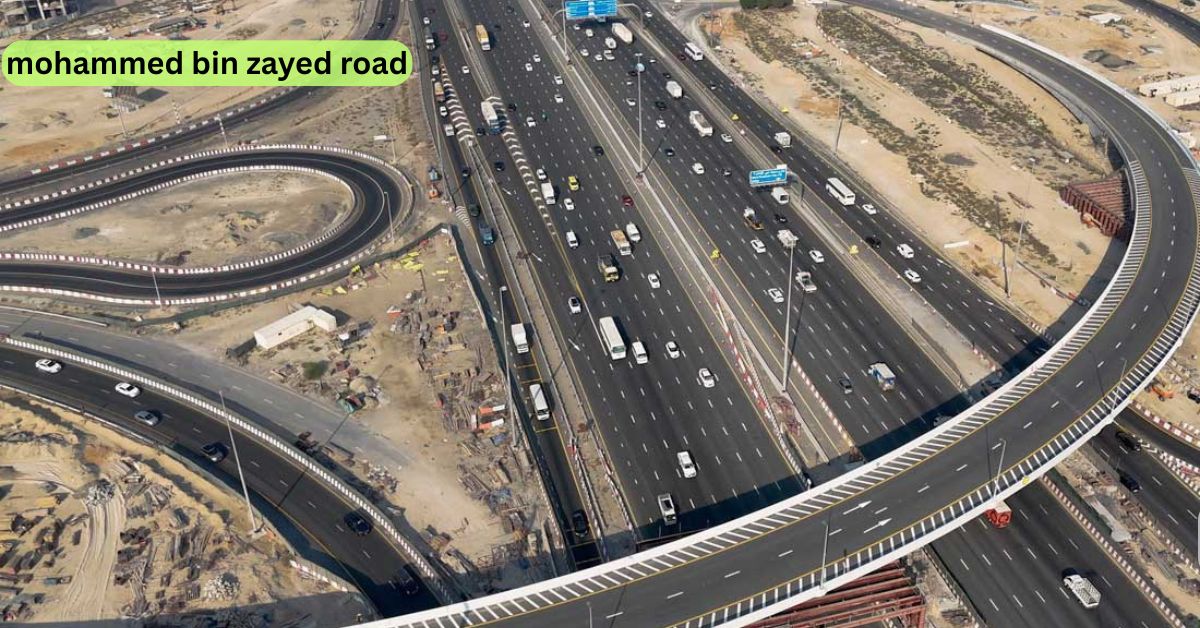
Over the last few decades, Dubai’s roads have become a symbol of the emirate’s development and the implementation of smart technologies. One of the most important roads is Mohammed Bin Zayed Road, often called the artery of the UAE’s transportation system.
It is a long road that connects bustling cities and outlying areas to your destination. This road begins in Abu Dhabi and continues to Ras Al Khaimah, the northernmost emirate, for a total of around 225 km. The Mohammed Bin Zayed Road does its function silently in contrast to the famous Sheikh Zayed Road, which offers breathtaking views of the skyline. Its absence would lead to traffic jams.
When you take this avenue, you will be in the eastern part of Dubai’s downtown. It is along Sheikh Zayed Road, but it stays away from the major congestion. They introduced the new name, Sheikh Mohammed Bin Zayed Road (E311), in 2013, and it is still in use today.
At the intersection of the above-mentioned emirates, it serves as the main artery between Abu Dhabi, Dubai, Sharjah, Ajman, Umm Al Quwain, and Ras Al Khaimah. It can even be considered a main transport route. It is the pipeline along which people and things can move to and fro, whether commuting to work or engaged in transportation.
This guide serves as a basis for understanding the route, history, and distinctions of Mohammed Bin Zayed Road, which is considered one of the most important roads in the UAE.
Overview of Mohammed Bin Zayed Road
Mohammed Bin Zayed Road, also known as MBZ Road, was inaugurated in the early 2000’s. This road connects the capital city of Abu Dhabi with the northern Emirates, a region that is growing rapidly in the UAE. The road runs from the starting point, New Al Falah in Abu Dhabi, to the northeast through the outskirts of Dubai and Sharjah. Unlike Sheikh Zayed Road, there are no tolls on MBZ Road. By 2005, it had even reached Ras Al Khaimah, with the stretch further developed to Sharjah, Ajman, and Umm al-Quwain. Its official name is E311, but it is commonly called MBZ Road or Sheikh Mohammed Bin Zayed Road to honor the UAE’s Crown Prince.
Key Facts of Mohammed Bin Zayed Road
Here is a quick reference table summarizing the highway’s details:
| Feature | Detail |
| Official Name | Sheikh Mohammed Bin Zayed Road (E311) |
| Former Name | Emirates Road (prior to 2013) |
| Established | 2001 (opening began; expanded to RAK by 2005) |
| Renamed | Jan 1, 2013 (by Dubai Ruler’s decree) |
| Length | 225 km (140 miles) |
| Western Terminus | New Al Falah, Abu Dhabi |
| Eastern Terminus | Al Rifah, Ras Al Khaimah |
History and Naming of MBZ Road
MBZ Road is the current name of the road previously known as Emirates Road. The E311 highway was a collaborative effort by Abu Dhabi and Dubai to ease downtown traffic congestion. The 2013 name change, which was intended to honor the Crown Prince of Abu Dhabi, General Sheikh Mohammed bin Zayed Al Nahyan, took place then. Following this alteration, another road, E611, was renamed “Emirates Road”.
The 2013 change stated: “Seal Mohammed Bin Zayed Road was redesigned from Emirates Road to the Sheikh Mohammed Bin Zayed Road,” regarding the prince’s influence in promoting the nation’s development. Now all the road signs and maps show the new name. Nevertheless, some people prefer the MBZ Road or the E311 because it tends to connect the UAE to a single area. This was a sign of how crucial that road is for connecting the federation and other projects in Dubai, like Mohammed bin Rashid Al Maktoum City, which is also named after significant figures, like a nearby location.
Route and Connectivity
The Route of Mohammed Bin Zayed Road is straightforward: start at Abu Dhabi and drive northeast. The highway crosses the boundary into Dubai/Sharjah and continues past Ajman’s outskirts before reaching Ras Al Khaimah. In Dubai, it runs roughly parallel to the coastline (and to Sheikh Zayed Road) but farther inland. Navigation and directions for this road are readily available – for example, entering “Sheikh Mohammed Bin Zayed Road (E311)” in Google Maps instantly highlights its entire course.
Emirates and Cities Along the Route
As it heads north, the MBZ Road links several emirates and cities. From Abu Dhabi, it skirts key areas like Masdar City and the Mussafah industrial zone. Crossing into Dubai/Sharjah, it bypasses Dubai Silicon Oasis and Dubai Production City. The highway briefly clips southern Sharjah before entering Ajman near its Maktoum bin Rashid Street border. Continuing north, it goes through Umm al-Quwain and finally into Ras Al Khaimah. In fact, the UAE’s Foreign Ministry confirms: “E311… starts from the emirate of Abu Dhabi and ends in the emirate of Ras Al Khaimah”. Thus, its location map shows a diagonal belt across the UAE.
For drivers, major interchanges link MBZ Road to other highways: it crosses Dubai–Al Ain Road (E66) and connects with Al Khail Road (E44) near Jebel Ali, for example. Together, these links make the highway an integral part of the country’s road network.
Infrastructure and Developments Along the Road
The corridor along MBZ Road has seen rapid development. Major projects and communities have sprung up along or near the highway:
- International City – A sprawling residential and business area built in 2004–2007 near Dubai’s outskirts.
- Dubai Silicon Oasis – A tech-oriented economic zone with universities and companies, easily reached via MBZ Road.
- Global Village – The seasonal cultural festival park lies just off E311, leveraging its highway access to attract millions of visitors.
- Dubai Sports City – A sports complex and stadium community served by an exit off Sheikh Mohammed bin Zayed Road.
- Arabian Ranches – A major suburban housing development near one of the interchanges.
Safety Improvements
In the mid-2000s, the road had a reputation for danger. In 2006, it was reportedly the UAE’s most dangerous road, with 19 people killed in just six months.
However, authorities didn’t ignore the problem. They expanded and upgraded the highway to improve safety. By 2006–07, Dubai’s RTA had widened key sections to six lanes in each direction. Roundabouts were replaced with interchanges and flyovers. Speed cameras were also introduced.
As a result, driving conditions improved significantly. Today, MBZ Road is considered much safer.
For example, after these upgrades, heavy vehicles were prohibited from Sheikh Zayed Road, making MBZ Road the main truck route. Drivers using MBZ Road no longer face as much congestion or roadside risk as before.
Speed, Tolls, and Driving Conditions
MBZ Road is a high-speed motorway. As of 2025, the maximum speed limit on Sheikh Mohammed bin Zayed Road is 140 km/h. (Dubai briefly experimented with a 160 km/h limit on E11, but E311’s limit has long been 140.) Notably, a previous rule enforcing a minimum speed of 120 km/h on the fast lanes was recently removed. In practice, you can cruise at 140 km/h, but you still must obey all road rules and speed cameras (fines are steep).
Unlike Dubai’s Salik toll roads, Sheikh Mohammed Bin Zayed Road is toll-free. This makes it popular for drivers trying to avoid charges on Sheikh Zayed Road. In fact, road signs often point out that E11 has toll gates (SALIK), while E311 does not. (For reference, after January 2025, the toll on Sheikh Zayed Road is AED 6 in peak hours and AED 4 off-peak.)
For navigation, standard GPS apps fully support MBZ Road. If you search for “Mohammed bin Zayed Road map” or ask your phone for “Sheikh Mohammed bin Zayed Road directions,” the route will be highlighted. Road signs clearly mark the highway number and name. Public buses also use parts of it; for instance, Abu Dhabi’s intercity buses (like Route 166) depart via the MBZ Road. In short, whether by car or bus, the highway is easy to find and follow.
Figure: Sheikh Zayed Road (E11) in Dubai, lined with skyscrapers. The Sheikh Mohammed Bin Zayed Road (E311) runs parallel to it just out of view, offering a high-speed alternative.
Comparisons with Other UAE Highways
Sheikh Zayed Road (E11), Dubai’s landmark highway, is often compared with MBZ Road. E11 (the longest UAE road) runs right through downtown Dubai under the skyline. It used to have posted speed limits up to 160 km/h, but now both E11 and E311 are set at 140 km/h. Unlike E311, however, E11 carries Salik tolls and more local access points. For commuters, MBZ Road is often called the “back road” to avoid E11 traffic. While Sheikh Zayed Road is famous for its skyscraper views, MBZ Road mostly skirts the city and leads into the suburbs.
Another comparison is with Emirates Road (E611). After the 2013 renaming, “Emirates Road” became the name of E611, a different bypass south of Dubai. E311 (MBZ Road) should not be confused with E611, even though the old names were swapped. In practice, E311 (MBZ Road) connects Abu Dhabi to the north, while E611 (Emirates Road) loops around Dubai’s outskirts. Commuters now have multiple parallel options: E311, E11, and E611 all provide ways to traverse the region.
Future Plans and Enhancements
Construction on MBZ Road continues. In late 2024, Dubai authorities opened two new flyover bridges at the busy Garn Al Sabkha intersection on the Sharjah–Dubai border. This project reportedly cut peak traffic congestion by up to 70%. In Abu Dhabi, the recently opened Sheikh Zayed Bridge extension (linking Jebel Ali Free Zone to Abu Dhabi) connects to MBZ Road, boosting capacity.
Looking ahead, there are proposals to extend the highway beyond Ras Al Khaimah into Oman’s Musandam Peninsula. If completed, MBZ Road would directly connect the UAE to an Omani exclave – a plan reflecting its strategic role. Other planned upgrades include smart traffic management and perhaps dedicated truck lanes. Overall, the highway is set to remain a backbone of UAE transport for decades to come.
Conclusion
Sheikh Mohammed bin Zayed Road (E311) is a vital conduit across the Emirates. It was built to relieve city traffic and has since become a catalyst for regional growth. Stretching from Abu Dhabi’s desert to the mountains of Ras Al Khaimah, the road links key cities and free zones. It offers fast, toll-free travel (140 km/h limit) and now features modern interchanges and bridges to improve flow. Whether you know it as MBZ Road, E311, or the former Emirates Road, this highway is an essential part of the UAE’s infrastructure and daily life.