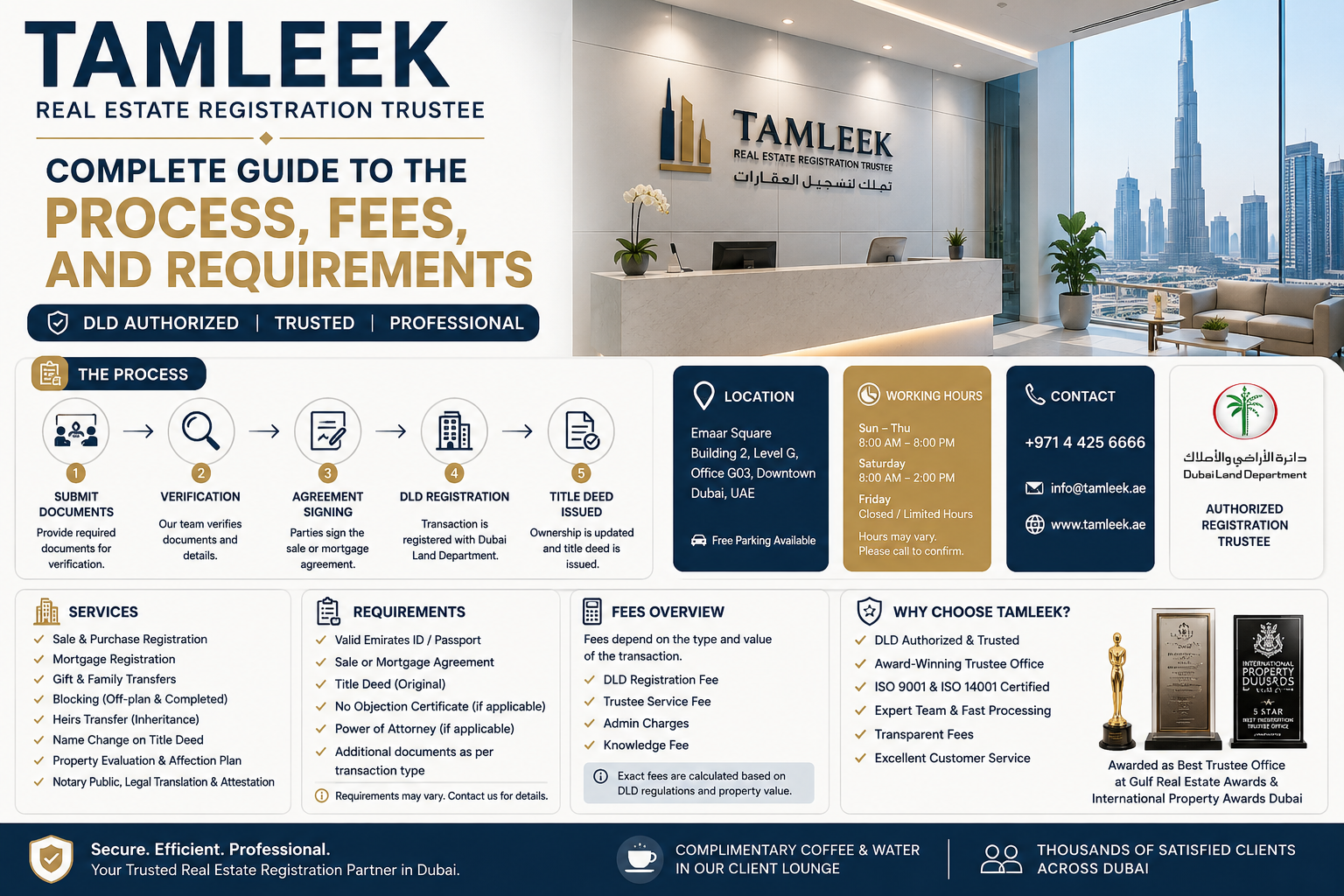
Every property transaction in Dubai requires a licensed intermediary that protects both the buyer and the seller before ownership legally changes hands. Tamleek Real Estate Registration Trustee operates as one of these Dubai Land Department approved centers, verifying documents, coordinating with government systems, and ensuring that a sale, mortgage, or transfer meets every legal requirement before it is finalized. This guide walks through what the trustee system does, how the registration process unfolds step by step, what fees to expect, which documents buyers and sellers need to prepare, and how to avoid the mistakes that most often cause delays.
What a Real Estate Registration Trustee Does in Dubai
A real estate registration trustee is a licensed entity authorized by the Dubai Land Department to facilitate the legal transfer of property between parties. The trustee verifies that documents are complete and accurate, confirms that both sides meet their contractual obligations, and submits the finalized transaction directly into the Dubai Land Department system for official registration. This structure functions similarly to an escrow arrangement, since it protects both the buyer’s funds and the seller’s title until every condition of the sale has been satisfied.
Why Dubai Requires This System
Dubai introduced the trustee system to reduce fraud and add transparency to a property market that continues to attract both regional and international investors. Before the system existed, buyers occasionally lost deposits to unverified sellers, while sellers sometimes faced disputes after transferring ownership without receiving full payment. Every sale in Dubai must now be processed through an authorized registration trustee office, regardless of the property’s value, which gives both parties a documented, legally binding record of the transaction.
How This Differs From a Standard Real Estate Agent
A real estate agent negotiates price and terms on behalf of a client, while a registration trustee remains neutral and focuses solely on verifying documents and completing the legal transfer correctly. Many buyers and sellers work with an agent throughout the negotiation phase and only interact with the trustee once terms are agreed, since the trustee’s role begins after the deal itself has been struck rather than during the negotiation process.
How the Registration Process Works Step by Step
The registration journey follows a defined sequence, and understanding each stage in advance helps both buyers and sellers avoid unnecessary delays once the process begins.
Step One: Signing the Memorandum of Understanding
The process generally begins once a buyer and seller agree on terms and sign a memorandum of understanding that states the sale price, payment schedule, and expected completion date. The trustee then reviews this document for completeness before the transaction moves forward, checking that the agreed terms align with what the Dubai Land Department requires for a valid sale record.
Step Two: Submitting and Verifying Documents
Once the memorandum is confirmed, both parties submit their required paperwork for verification. Buyers typically provide identification, proof of funds, and mortgage pre approval documents if financing is involved, while sellers submit the original title deed, any required no objection certificate from the developer, and a mortgage clearance letter if the property carries an existing loan. Every document is checked against current Dubai Land Department requirements before the transaction can proceed further.
Step Three: Securing Payment Before Transfer
After documents pass verification, the buyer’s payment is processed and held securely until every condition in the agreement has been met. This arrangement protects both sides, since funds cannot be released to the seller until the transaction has cleared every remaining legal check, and the buyer cannot be asked to release money before the seller’s obligations are confirmed.
Step Four: Final Registration at the Trustee Office
Once every condition has been satisfied, an appointment is scheduled for final registration. Both parties attend in person to sign the completed transfer paperwork, and Tamleek Real Estate Registration Trustee submits the transaction to the Dubai Land Department, coordinates the release of funds to the seller, and issues the new title deed to the buyer once registration is officially confirmed. Straightforward sales without financing complications typically complete within about a week to ten business days from the signed memorandum, though transactions involving mortgages or off plan developer approvals can take considerably longer.
Fees Involved in the Registration Process
Understanding the full cost of a Dubai property transaction requires looking beyond the advertised sale price, since several government and trustee charges apply at different stages of the process.
The Dubai Land Department Transfer Fee
The largest cost in any Dubai property transaction is the Dubai Land Department transfer fee, which is set at four percent of the property’s sale value and is paid at the time of registration. By law this fee is split evenly between buyer and seller, though in practice the buyer commonly covers the full amount as part of standard market convention that has developed over many years of transactions.
Trustee Office Registration Fees
Separate from the government transfer fee, the trustee office collects its own registration service fee, which follows a tiered structure based on the property’s value rather than a percentage of the sale price. For properties valued below five hundred thousand dirhams, the trustee fee is typically two thousand dirhams plus five percent value added tax, while properties valued at or above that threshold carry a trustee fee of four thousand dirhams plus value added tax.
Additional Charges to Expect
Additional charges may apply depending on the specific transaction, including a title deed issuance fee of around two hundred fifty dirhams and, for financed purchases, a mortgage registration fee equal to a quarter of one percent of the loan amount plus a small administrative charge. Buyers are encouraged to request a full cost breakdown from Tamleek Real Estate Registration Trustee before finalizing a purchase, since exact figures can vary slightly depending on the services required for a given transaction.
Documents Buyers and Sellers Need to Prepare

Incomplete paperwork remains the leading cause of delays at any trustee office, so knowing exactly what to prepare in advance makes a meaningful difference in how quickly a transaction moves forward.
Documents Required From Buyers
Buyers generally need a valid passport with a current UAE visa, an Emirates ID, and bank statements or a mortgage pre approval letter demonstrating proof of funds. Joint purchases involving a spouse may also require a marriage certificate, and financed purchases require confirmation from the lender that the mortgage amount aligns with the agreed sale price once all associated fees are included.
Documents Required From Sellers
Sellers typically need to provide the original title deed, a no objection certificate from the property developer or community management, and a mortgage clearance letter if the property was previously financed. A current Dubai Electricity and Water Authority clearance certificate is also commonly required to confirm that no outstanding utility charges remain on the property before the transfer proceeds.
Additional Requirements for Corporate Transactions
Corporate sellers face additional requirements, including a valid trade license, board resolution authorizing the sale, and documentation confirming the authority of the signatory completing the transaction on the company’s behalf. These extra verification steps typically extend the overall processing timeline compared to a standard transaction between individuals.
What Happens if a Transaction Falls Through
The structure used by this trustee office is designed to protect both sides if a deal does not reach completion. If a buyer withdraws without a valid contractual reason, the seller generally retains the deposit as compensation under the terms of the signed memorandum of understanding. If a seller fails to deliver a clear, unencumbered title as promised, the buyer is typically entitled to a full refund of any funds already paid toward the transaction. Disputes that cannot be resolved directly between the parties are generally handled according to the terms outlined in the original memorandum, and unresolved cases may be referred to the Dubai Land Department for further review.
Working With Foreign and Corporate Buyers

Dubai permits full foreign ownership within designated freehold areas, and this trustee office processes transactions for buyers from a wide range of nationalities. Non resident buyers typically need certified translations of any foreign language documents and clear evidence that funds used for the purchase were transferred through legitimate banking channels. Depending on nationality, some transactions may require additional security clearance, which can extend the standard processing timeline by a week or two beyond a typical domestic sale. Corporate and commercial transactions follow a similar overall framework but require additional verification of the purchasing entity, including business licensing and confirmation of the individual authorized to sign on the company’s behalf.
Common Mistakes to Avoid During Registration
Most delays at the trustee office trace back to a small number of avoidable errors, and knowing these in advance can save considerable time during an already detailed process.
Using Outdated Documents
Submitting outdated documents is one of the most frequent causes of delay, since the Dubai Land Department generally expects supporting paperwork such as bank statements and no objection certificates to be issued within the preceding few months. Requesting fresh copies of key documents before beginning the process helps prevent last minute rejections that can push back an otherwise straightforward transaction.
Ignoring the Full Cost of Financing
Assuming a mortgage pre approval automatically covers every associated cost is another common misstep, since approved loan amounts do not always account for transfer fees, trustee charges, and other administrative costs layered on top of the purchase price. Buyers should calculate their total required cash carefully before signing the memorandum of understanding, rather than discovering a shortfall late in the process.
Skipping an Independent Property Inspection
A registration trustee verifies legal ownership rather than the physical condition of a property, so arranging an independent inspection remains an important separate step before committing funds to any purchase. Buyers who skip this step sometimes discover structural or maintenance issues only after the transfer has already been completed.
Misunderstanding Freehold and Leasehold Zones
Dubai divides property ownership into freehold and leasehold zones, and not every area allows full ownership by non GCC nationals. Confirming which category a specific property falls under before signing the memorandum of understanding prevents complications that can otherwise surface late in the registration process.
Conclusion
Tamleek Real Estate Registration Trustee plays a central role in making Dubai property transactions secure, transparent, and legally binding for everyone involved. Understanding how the process unfolds, what fees apply at each stage, and which documents need to be prepared in advance helps both buyers and sellers avoid unnecessary delays. With proper preparation, most transactions handled through this trustee system move from signed agreement to completed registration within a matter of days rather than weeks.
Frequently Asked Questions
What does a real estate registration trustee actually do?
A registration trustee verifies documents, oversees secure handling of transaction funds, and submits the completed sale to the Dubai Land Department for official registration. This ensures both the buyer and seller meet their legal obligations before ownership transfers.
How much does the registration process cost?
The Dubai Land Department charges a four percent transfer fee based on the property’s sale value, and the trustee office adds a separate service fee that is typically two thousand or four thousand dirhams plus tax depending on the property’s value. Additional charges may apply for title deed issuance or mortgage registration.
How long does the process usually take?
Straightforward sales without financing complications typically complete within about a week to ten business days once documents are verified. Transactions involving mortgages or off plan developer approvals often take several weeks longer.
What happens to my money during the transaction?
Funds are held securely and cannot be released until every condition of the sale agreement has been met and the Dubai Land Department confirms the transfer. This protects both the buyer and the seller if a dispute arises before the deal is finalized.
Can foreign buyers use this trustee service?
Yes, foreign buyers can purchase property in designated freehold areas of Dubai and complete registration through this trustee system. Non resident buyers should prepare certified document translations and clear proof that funds were transferred through legitimate banking channels.
What if the seller still has an existing mortgage on the property?
The seller must obtain a mortgage clearance letter from their bank confirming the loan has been or will be settled from the sale proceeds. The trustee coordinates this process to ensure the remaining balance is transferred to the seller only after the mortgage is cleared.