Nad Al Hamar Dubai sits quietly on the eastern edge of the city, far removed from the glass towers and tourist crowds that define Downtown and the Marina, yet close enough to everything that matters. This neighborhood has become one of the most talked-about suburban residential pockets in the emirate, drawing families, long-term tenants, and investors who want affordable villas without sacrificing access to major highways, schools, and shopping. Anyone searching for Nad Al Hamar Dubai today will find a community in transition: an established residential base layered with new mixed-use development, expanding retail, and steady infrastructure upgrades.
| Quick Facts | Details |
|---|---|
| Location | Sector 4, north-central Dubai, east of Dubai Creek |
| Area Size | Approximately 8.3 square kilometers |
| Boundaries | Al Rebat Street (N), Sheikh Mohammed Bin Zayed Road (E), Ras Al Khor Road (S), Nad Al Hamar Road (W) |
| Property Types | Villas, townhouses, apartments |
| Key Developers | wasl Properties, Amlak Finance |
| Major New Project | Nad Al Hamar Gardens (freehold, ~6 million sq ft) |
| Nearest Metro | Rashidiya Station (Red Line, via bus) |
| Nearby Landmarks | Dubai Festival City, Ras Al Khor Wildlife Sanctuary, Mirdif City Centre |
| Community Type | Residential with adjoining industrial zone |
Where Nad Al Hamar Dubai Is Located
Nad Al Hamar Dubai occupies Sector 4 in the north-central part of the city, roughly 8.3 square kilometers in size, positioned east of Dubai Creek. The community’s boundary roads define its character almost as much as its housing stock does. Al Rebat Street (D83) marks the northern edge and links the area directly to western Deira, while Sheikh Mohammed Bin Zayed Road (E311) runs along the eastern flank, connecting residents to Dubailand and the wider emirate. Ras Al Khor Road (E44) forms the southern border and feeds straight into Downtown Dubai, the city’s commercial heartbeat. On the western side, Nad Al Hamar Road itself separates the community from neighboring Muhaisnah and Al Mizhar, and this same road is a primary route toward Dubai International Airport.
This positioning gives Nad Al Hamar Dubai a rare combination: a quiet residential atmosphere paired with rapid access to the airport, Festival City, and the Ras Al Khor Industrial Area to the south. Commuters who work in Deira, Bur Dubai, or even Sharjah often choose this neighborhood precisely because it shaves time off the daily drive without forcing them into the density of more central districts.
Demographics and Community Character
Unlike sprawling master-planned suburbs such as Arabian Ranches or Mudon, Nad Al Hamar Dubai remains comparatively small and tightly knit. The resident population is modest, with the majority being UAE nationals, and the overall vibe leans family-oriented and low-key. Streets are wide and shaded, plot sizes are generous by Dubai standards, and there’s a noticeable absence of the high-rise congestion found closer to the coast. This is not a neighborhood built for nightlife or tourism; it’s built for households that prioritize space, privacy, and a settled environment over proximity to the beach or Downtown skyline.
The architectural style across Nad Al Hamar Dubai blends modern Gulf design with traditional Arabic detailing. Villas typically feature high boundary walls, ornate gates, private gardens, and generous setbacks from the street, giving each home a sense of seclusion even within a populated community.
Housing and Real Estate in Nad Al Hamar Dubai
Property in Nad Al Hamar Dubai splits into three broad categories: standalone villas, townhouses, and a smaller stock of apartments. Villas dominate the interior streets of the community, offering more privacy, larger footprints, and often a private pool or garden. Apartments tend to cluster along the main arterial roads, catering to smaller households or tenants who don’t need a full villa. Townhouses sit somewhere in between, blending shared community infrastructure with individual home privacy, and they’ve become increasingly popular with younger families relocating from more crowded parts of the city.
Two established developers have shaped the residential character of the area: Wasl Properties and Amlak Finance. Wasl, in particular, manages a significant share of the rental villa stock here, which has made Nad Al Hamar Dubai a recognizable name among tenants searching specifically for wasl-managed properties in eastern Dubai.
Nad Al Hamar Gardens: The Major New Development
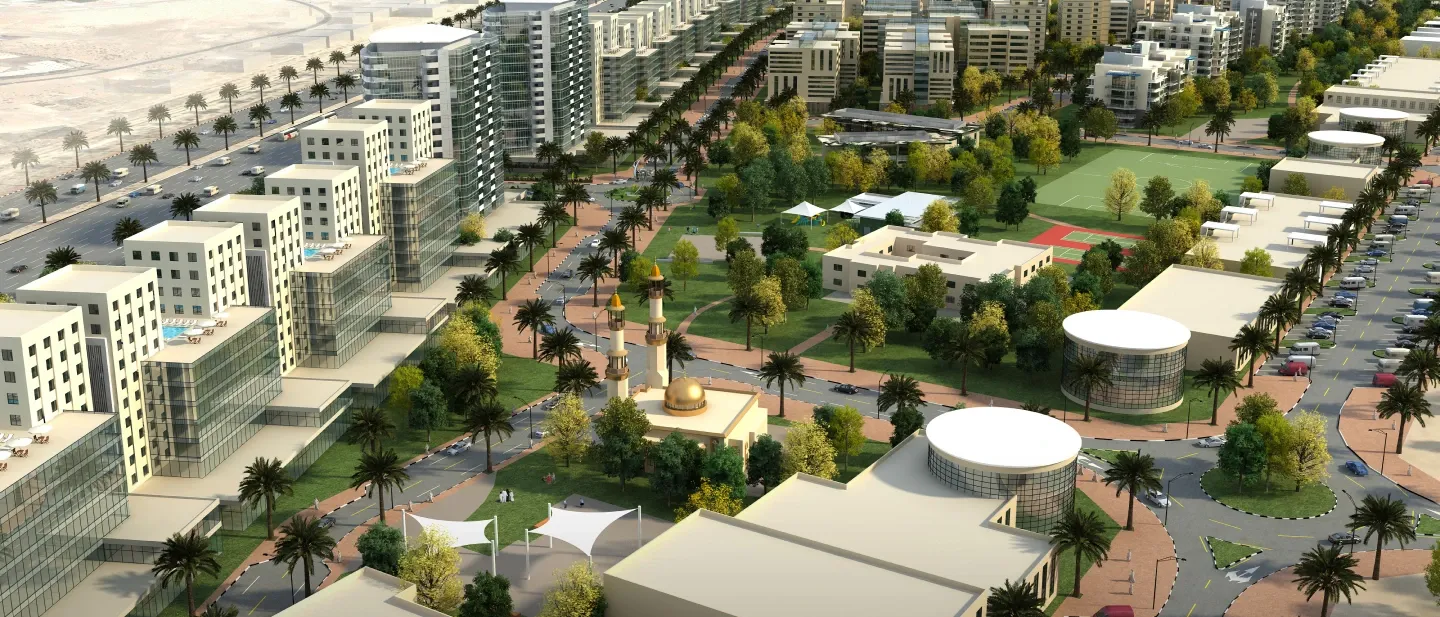
The biggest shift in the area’s real estate profile comes from Nad Al Hamar Gardens, a large mixed-use project developed by wasl Asset Management Group, a subsidiary of the Dubai Real Estate Corporation. This mixed-use development sits opposite Sheikh Mohammed Bin Zayed Road and is expected to span roughly six million square feet, combining residential and commercial buildings with heavy emphasis on green and open spaces.
The scale of this project is substantial. The masterplan includes 69 residential buildings of varying heights (seven, nine, eleven, and thirteen storeys), alongside 32 mixed-use buildings ranging from seven to sixteen storeys, plus 12 showroom plots and 2 school plots. Two mosques and dedicated retail areas are also part of the plan, and investors have the option to purchase the freeholds of the available plots. Plot sizes within the development vary considerably, accommodating everything from boutique commercial units to large-scale residential towers.
What makes Nad Al Hamar Gardens particularly relevant for buyers is its freehold ownership structure, a rarity in this part of Dubai where most surrounding communities remain leasehold. The development offers retail units, food and beverage outlets, supermarkets, and office spaces, alongside easy access to nearby healthcare centers and schools. For investors specifically, this represents one of the few freehold entry points into an otherwise leasehold-dominated eastern Dubai corridor.
| Nad Al Hamar Gardens Masterplan | Count |
|---|---|
| Residential Plots | 69 |
| Mixed-Use Plots | 32 |
| Showroom Plots | 12 |
| School Plots | 2 |
| Mosques | 2 |
| Total Development Area | ~6 million sq ft |
Connectivity and Transport Options
Getting around from Nad Al Hamar Dubai is straightforward thanks to its proximity to two of the city’s busiest arterial roads. Sheikh Mohammed Bin Zayed Road and Ras Al Khor Road both border the community directly, meaning residents reach Downtown Dubai, Business Bay, and Festival City within roughly fifteen to twenty minutes under normal traffic conditions. The airport sits a similarly short drive away via Nad Al Hamar Road, making this neighborhood genuinely convenient for frequent flyers and airport-based staff.
Public transport coverage is thinner than in central Dubai. The community is not served directly by the Dubai Metro, and the nearest stations require a bus connection or taxi ride. Rashidiya Station on the Red Line is the most commonly used metro access point, reached via local bus routes that run through the neighborhood. This makes private vehicle ownership the practical default for most households here, though bus links remain a reliable backup for those without a car.
Shopping, Dining, and Daily Amenities
Daily life in Nad Al Hamar Dubai revolves around a mix of small community retail and larger malls just outside the neighborhood’s borders. Within the community itself, Amaya Plaza functions as a local hub for boutique shops, casual dining, and everyday services. Nad Al Hamar Avenues adds another layer of community-level retail, while grocery needs are covered by outlets such as Aswaaq Supermarket, Al Rufaidha Grocery, and Nad Al Hamar Star.
For larger shopping trips, residents typically head to Dubai Festival City Mall or Mirdif City Centre, both within a short drive. These malls carry international retail names including Zara, H&M, Sephora, and Adidas, giving residents full access to mainstream retail without needing to travel into the city center. The combination of hyperlocal convenience stores and nearby regional malls strikes a balance that many residents specifically cite as a reason for choosing this part of Dubai.
Parks, Green Spaces, and Recreation
Green space is woven throughout Nad Al Hamar Dubai in a way that’s less common in Dubai’s denser districts. Community parks line several of the internal roads, and many villas include private gardens as standard. This greenery, combined with wide streets and low-rise housing, gives the neighborhood a noticeably calmer visual character compared to areas closer to the city center.
For larger outdoor experiences, the Ras Al Khor Wildlife Sanctuary lies just south of the community, offering one of Dubai’s most significant natural attractions: a protected wetland home to flamingos and other migratory bird species. Residents of Nad Al Hamar Dubai have unusually quick access to this sanctuary compared to most of the city’s population.
Healthcare, Education, and Religious Facilities
The Nad Al Hamar Health Centre serves as the primary public healthcare facility within the community, providing general medical services to residents without requiring a trip into central Dubai. Several private clinics supplement this coverage for specialized needs.
On the education front, the community includes schools catering to local demand, with the Nad Al Hamar Gardens masterplan specifically allocating two additional school plots to meet future enrollment growth as the new development comes online.
Religious infrastructure is well represented too. The Nad Al Hamar Mosque ranks among the larger mosques in Dubai, serving as a central point for the community’s Muslim residents. For those of other faiths, Hindu temples are accessible in Bur Dubai near Oud Mehta, and a Gurudwara is located a short drive away in the Ras Al Khor Industrial Area.
Historical Background
The name Nad Al Hamar traces back to the area’s desert origins, reflecting the natural terrain that once defined this part of Dubai before urban expansion reached it. In its earlier decades, the area was sparsely populated, functioning largely as open desert land on the city’s outer fringe. As Dubai’s broader economic transformation accelerated, particularly following the oil boom era, infrastructure investment gradually reached this corridor, paving roads, extending utilities, and laying the groundwork for residential development.
What began as a remote desert tract has since evolved into a functioning urban community, reflecting Dubai’s broader pattern of expanding outward from its historic creek-side core. Today, Nad Al Hamar Dubai stands as a tangible example of that transformation: a neighborhood that retains a sense of space and quiet while remaining fully integrated into the city’s road network, utilities, and commercial life.
Industrial Zone and Commercial Activity
Beyond its residential character, Nad Al Hamar Dubai also carries a partial industrial identity. The southern portion of the community adjoins the Ras Al Khor Industrial Area, and a meaningful share of the neighborhood’s commercial and light-industrial activity is concentrated here. This dual identity, residential in the core and industrial at the edges, is fairly typical of Dubai’s eastern districts, where land use often blends commercial utility with suburban housing rather than separating them entirely.
Is Nad Al Hamar Dubai Worth Considering
For tenants and buyers prioritizing space, quiet streets, and quick highway access over proximity to the beach or Downtown nightlife, Nad Al Hamar Dubai checks most of the practical boxes. Rental rates here generally undercut comparable properties in more centrally located communities, while the upcoming Nad Al Hamar Gardens project introduces a freehold investment angle that didn’t previously exist in this corridor. The trade-offs are equally clear: limited metro access, a smaller retail footprint than mega-communities like Arabian Ranches or Dubai Hills, and a location that, while convenient for highway travel, sits outside Dubai’s primary tourism and business zones.
As infrastructure continues to mature around the new mixed-use development, Nad Al Hamar Dubai is positioned to gradually shift from a quiet, lesser-known suburb into a more fully serviced residential and commercial node on Dubai’s eastern map.
Frequently Asked Questions
Where exactly is Nad Al Hamar located in Dubai?
Nad Al Hamar sits in Sector 4 of north-central Dubai, bordered by Al Rebat Street to the north, Sheikh Mohammed Bin Zayed Road to the east, Ras Al Khor Road to the south, and Nad Al Hamar Road to the west.
Is Nad Al Hamar a good area to live in?
It suits families and tenants who want spacious villas, quiet streets, and quick highway access, though it lacks direct metro service and the retail density of larger Dubai communities.
What is Nad Al Hamar Gardens?
It is a large freehold mixed-use development by wasl Properties, covering residential buildings, mixed-use towers, showrooms, schools, and mosques across roughly six million square feet.
Does Nad Al Hamar have metro access?
No direct metro station serves the community; the nearest connection is Rashidiya Station on the Red Line, reached via local bus routes.
What types of properties are available in Nad Al Hamar?
The area offers villas, townhouses, and apartments, with villas concentrated in the interior streets and apartments clustered along main roads.