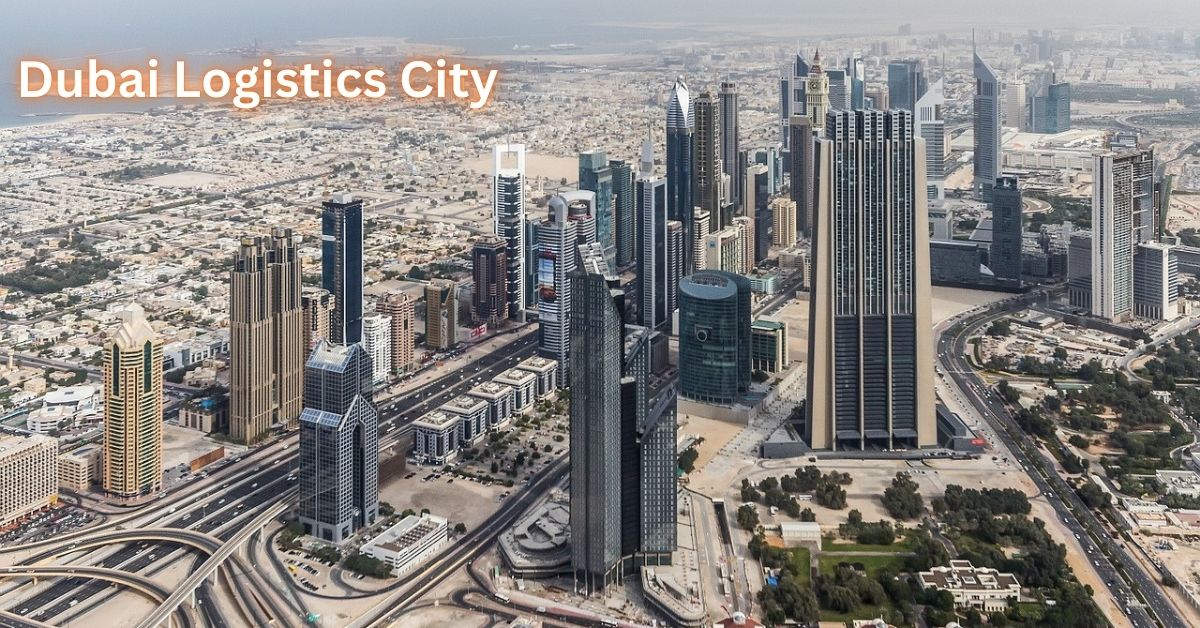
Dubai Logistics City (DLC) is one of the most advanced logistics free zones in the world. It was built to help global trade move quickly, efficiently, and cheaply. DLC was built in 2006 as part of the Dubai South (Dubai World Central) project. It is next to Al Maktoum International Airport and covers over 25 square kilometres. From the beginning, it was meant to be a fully integrated logistics platform where all forms of transportation—air, sea, and land—work together under one bonded customs system.
Dubai Logistics City is often called the first real multi-modal logistics hub in the world. It allows cargo to travel smoothly from the seaport to the warehouse and then to the plane without going through customs again. This arrangement reduces handling time, lowers costs, and improves the supply chain. Today, DLC is home to about 7,000 enterprises, including numerous Fortune 500 organisations, that work in logistics, warehousing, manufacturing, and value-added services. DLC is a key part of making Dubai a global commercial gateway, thanks to its strategic planning and welcoming environment for investors.
Strategic Location
A Gateway Between Continents
Dubai Logistics City is well-positioned for international trade, as it sits at the crossroads of Asia, Africa, and Europe. The free zone is right close to Al Maktoum International Airport, which is expected to become the world’s largest cargo airport. It is also connected to Jebel Ali Port, the world’s largest man-made port, by a special logistics corridor.
This specially developed corridor enables cargo to be moved from Jebel Ali Port to Al Maktoum Airport in around 20 minutes. Sheikh Mohammed Bin Zayed Road (E311) and Emirates Road (E611) are two of the main roads running alongside the zone. This makes it easy for people to get around the UAE by road. DLC is in a great location, making it a central hub for commerce routes in the Gulf and around the world. It has quick and reliable access to land, sea, and air.
Infrastructure and Connectivity
Integrated Air, Sea, and Road Transport
Dubai Logistics City is built to handle large volumes of cargo quickly. It has direct access to the airside, allowing planes to dump cargo directly into bonded warehouses. This reduces the time required to transfer cargo to and from the airport. For marine freight, a special express route connects DLC to Jebel Ali Port. The zone is also connected to industrial and residential areas across the region via an extensive network of roads.
There is only one set of customs rules for all goods transportation within DLC. When goods arrive by ship, they can be transported by truck to DLC warehouses and then loaded onto planes without going through customs again. DLC is known as one of the fastest and most efficient cargo ports in the world, and its streamlined model is a big part of that.
Advanced Warehousing and Facilities
Dubai Logistics City features sophisticated, ready-to-use warehouses that meet international logistics standards. Facilities feature high ceilings, climate-controlled spaces, reinforced floors, and wide loading bays that accommodate large trucks and cargo. Heavy vehicles have their own lanes to keep traffic moving smoothly without becoming stuck.
Companies can rent pre-built warehouses and workspaces, allowing them to start working right away without waiting for development to finish. This all-in-one strategy reduces capital costs and lets businesses focus on logistics rather than building new infrastructure.
A One-Stop Supply Chain Ecosystem
DLC is a whole supply chain ecosystem in which many logistics providers operate in the same area. There are freight forwarders, third-party logistics providers, customs brokers, packaging specialists, and light assembly operations, all very close to each other.
With the bonded customs system, you can bring in goods, process, label, repackage, or assemble them, then send them out without leaving the free zone. A business can bring in electronics, label or set them up on-site, and send the final products via air on the same day, for example. This integrated structure reduces delays, streamlines coordination, and keeps cargo moving smoothly.
Benefits of Dubai Logistics City Free Zone

100% Ownership and Tax Advantages
Dubai Logistics City is a free zone in the UAE that offers excellent benefits to foreign investors. Foreigners can completely own companies without needing a local partner. Most operations don’t have to pay corporation or personal income tax, and products that come in or out of the zone don’t have to pay customs taxes.
Companies can also repatriate all their profits and capital, and there are no limits on dividends. These advantages significantly reduce operational expenses, making DLC a strong competitor to many Western logistics centers.
Simplified Customs and Regulations
Dubai Logistics City has a separate customs system just for businesses that do a lot of commerce. In the bonded zone, you can store, process, and re-export cargo without undergoing customs clearance. Advanced digital documentation systems, faster approvals, and pre-clearance procedures all help reduce paperwork and delays even further.
This regulatory efficiency makes it easy to switch between means of transportation and helps speed up turnaround times. This makes DLC especially appealing for cargo that needs to get there quickly or is worth a lot of money.
Plug-and-Play Logistics Infrastructure
DLC has a lot of plug-and-play infrastructure, like pre-built warehouses, offices, and workshops with racking systems, material-handling equipment, and IT connections. From the start, there are wide service roads, cargo handling facilities, and customs checkpoints.
The zone’s design is adaptable and expandable, so firms can quickly grow their operations as demand rises without relocating or changing how they operate.
Strong Logistics Community and Network Effects
Dubai Logistics City has a significant network impact, with more than 7,000 businesses in the area. Global freight carriers, courier services, warehouse companies, and supply chain experts all work together, which encourages collaboration and partnerships.
This large logistics community makes it easier for firms to outsource services, get lower prices, and reach markets in Africa, South Asia, and the Middle East. Many businesses choose DLC not just for its facilities, but also for its well-positioned location in Dubai’s established trade environment.
License Categories and Permitted Activities
Available License Types
Dubai Logistics City Free Zone offers a range of license types to support a wide range of commercial activities. These include licenses for logistics, covering freight and warehouse operations; licenses for industry, covering light manufacturing and assembly; licenses for trade, covering import and export activities; licenses for service, covering professional services; and licenses for education, covering logistics and aviation training institutes.
Depending on how the firm is set up and what it needs, companies usually register as Free Zone Establishments (FZE) or Free Zone Companies (FZCO).
Permitted Business Activities
DLC supports a wide range of activities, including warehousing and distribution, light manufacturing, packaging and labeling, freight forwarding, customs clearing, e-commerce fulfillment, and aviation-related logistics services. This flexibility allows companies to manage entire supply chains from a single location without leaving the free zone.
Setting Up a Business in Dubai Logistics City
Business Setup Process
Setting up a business in Dubai Logistics City is a simple process that follows the free-zone rules. Businesses identify what they want to do and the kind of license they need, choose a company structure, submit the necessary paperwork, and rent the right office or warehouse space. The Free Zone Authority issues the license upon acceptance, allowing operations to begin.
There are several government services available on-site, such as customs coordination and visa processing, which makes setting up easier.
Timeline and Costs
Setting up a business in DLC is quick, with license approvals usually taking 1 to 3 weeks, as long as all the paperwork is in order. The cost of starting up a business depends on the type of license, the size of the facility, and the visa requirements. Basic licensing packages cost around AED 15,000, not including space rental and immigration expenses.
DLC is a good solution for global logistics companies because they don’t have to pay corporate tax or customs charges, which keeps ongoing operational costs low.
Economic Impact and Future Outlook
Role in the UAE Logistics Sector
Dubai Logistics City is an integral part of the UAE’s logistics industry, which made up around 14% of the country’s GDP in 2024. The sector is expected to grow significantly over the next few years due to increased global trade and infrastructure investment. DLC helps this progress by concentrating high-value cargo flows and providing jobs in logistics and supply chain services.
Future Growth and Expansion
Dubai is still investing heavily in improving DLC. The zone’s connectivity will further improve with ongoing expansion at Al Maktoum International Airport, enhanced road networks, and planned rail connections via Etihad Rail. Nearby projects such as Expo City Dubai and new housing areas will also help increase the workforce.
Dubai Logistics City is well on its way to remaining a top global logistics hub thanks to its future-ready infrastructure, advanced customs systems, and strong policy backing.
Conclusion
Dubai Logistics City is a model for advanced logistics centers. Its interconnected infrastructure, single customs system, strategic location, and investor-friendly regulations make it the best place in the world for trade. Businesses that operate in DLC receive faster cargo transportation, lower prices, and access to a vibrant logistics ecosystem. Dubai Logistics City is at the center of this strategy as Dubai continues to strengthen its role in worldwide trade. It connects markets, moves goods quickly, and supports the future of global supply chains.